
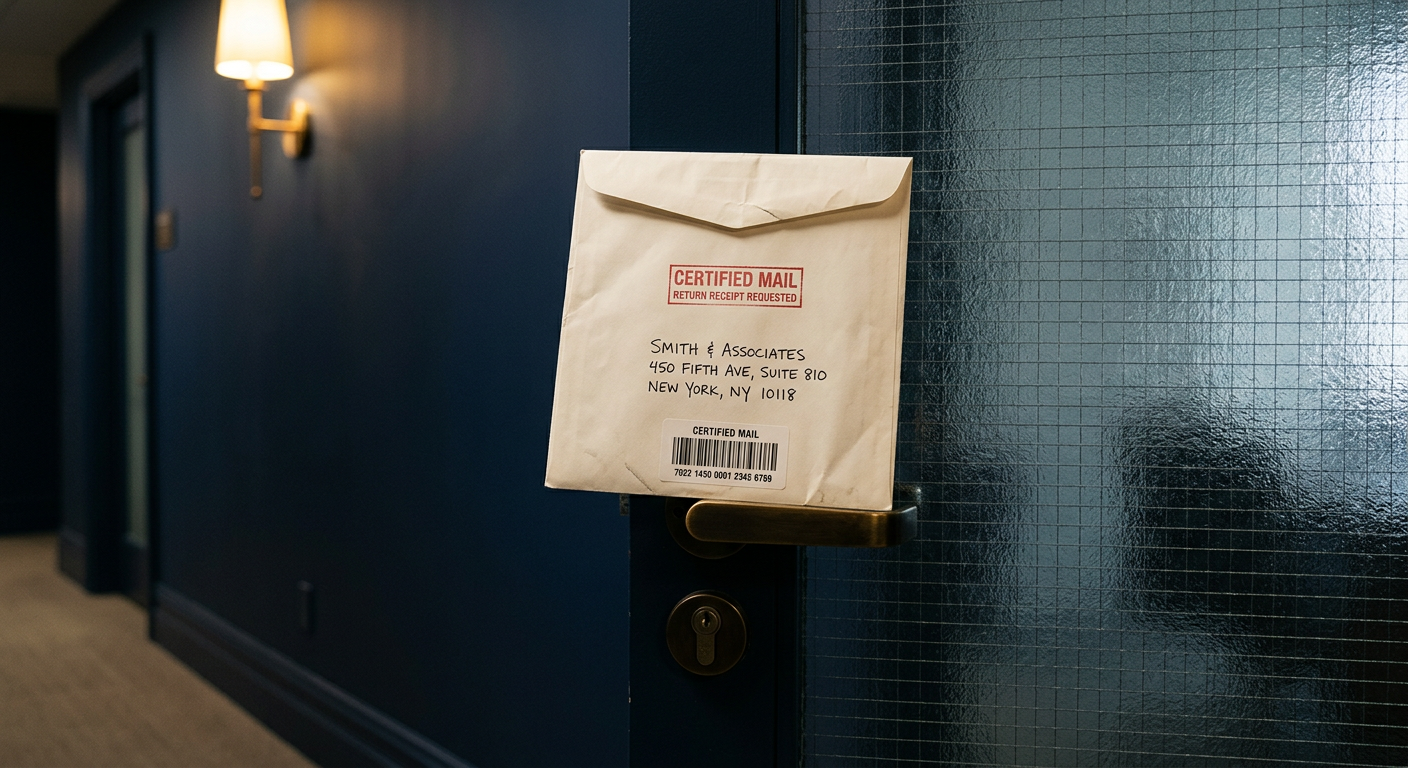
Every corporation and LLC registered in North Carolina must keep a registered agent and a registered office on file with the Secretary of State. That agent exists so the business can be served. Under N.C. Gen. Stat. § 1A-1, Rule 4(j), a plaintiff can serve the registered agent, or an officer, director, or managing agent, by personal delivery, by certified mail with return receipt requested, or by a designated delivery service. On paper it’s simple. In practice, the listed address is often a vacant suite, the agent moved years ago, or the agent is the owner, who has every reason to let certified mail go unclaimed. Litigation can stall before it really begins.
The usual first step is the sheriff. The summons goes to the sheriff in the county where the registered office is, and a deputy tries to deliver it in person. If the deputy can’t find the agent, the sheriff’s return documenting that failed attempt becomes useful evidence later. Timing also matters. A summons must be served within 60 days of issuance. If that window closes, the plaintiff needs an endorsement or an alias and pluries summons to keep the action alive. While that’s underway, check the entity’s most recent annual report. It lists the company’s officers and principal office address, which can open a second path to service.
If the agent truly can’t be found, North Carolina has a backstop. N.C. Gen. Stat. § 55D-33(b) makes the Secretary of State the entity’s agent for service in three situations:
- the entity fails to appoint or maintain a registered agent;
- the registered agent cannot be found at the registered office with due diligence;
- a foreign entity’s authority to do business in the state is revoked.
To serve this way, the plaintiff delivers two copies of the process and the filing fee to the Secretary of State’s Service of Process office in Raleigh. The Secretary of State then mails a copy by certified mail to the entity’s principal office. Service is effective on the date the Secretary of State is served. The key requirement is due diligence. A defendant who later attacks service, often after a default, will argue that the plaintiff skipped steps. A single returned envelope is a thin record. A sheriff’s return of “not found,” a returned certified mailing, and a check of the entity’s current filings together make a much stronger one. Each of those steps belongs in the affidavit of service filed under N.C. Gen. Stat. § 1-75.10. So, should you use the sheriff or the Secretary of State? In most cases, both, in that order. Try the registered agent first, through the sheriff or by mail. Serve the Secretary of State once the record shows the agent can’t be found. Going straight to the Secretary of State can save a few weeks, but it can cost far more if a judgment is later set aside for defective service. Lord & Lindley handles business disputes across North Carolina and regularly deals with defendants who are hard to serve. To discuss a matter, call 704-457-1010 or visit lordlindley.com.