
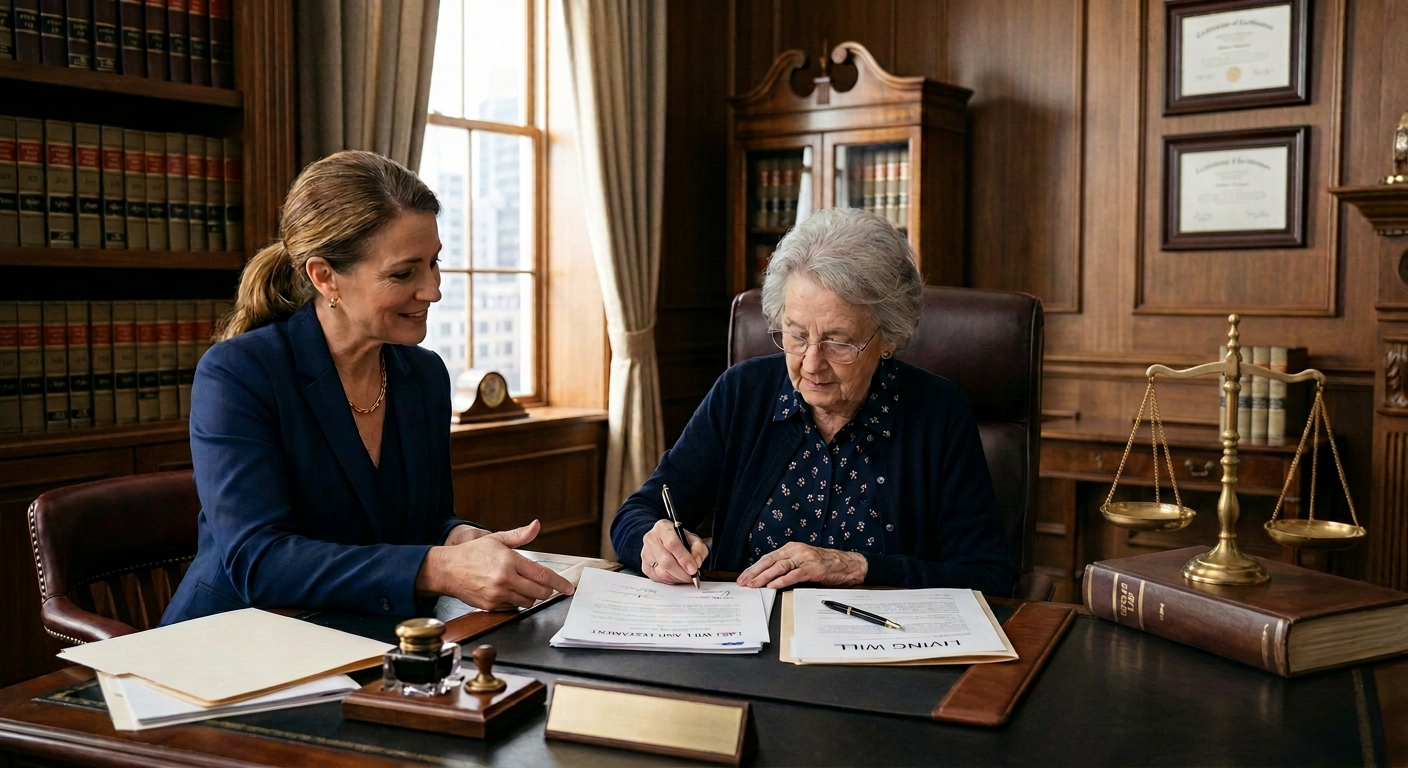
Every few months, a client calls convinced that a parent’s estate plan was obviously the product of manipulation. The plan changed late in life. It favored a caregiver, a new spouse, or one child over the others, and the family takes that unfairness as proof enough. It isn’t. North Carolina courts don’t ask whether a will or trust seems fair. They ask a narrower question: did the person who signed it actually make the decision, or did someone else make it for them?
Undue influence has a specific legal meaning, and it takes more than suspicion to prove. Courts look at a cluster of factors first laid out by the North Carolina Supreme Court in In re Will of Andrews, 299 N.C. 52, 261 S.E.2d 198 (1980): the testator’s age and physical or mental condition, whether the beneficiary controlled the testator’s daily life and limited contact with other family members, whether the plan departs sharply from a long-consistent estate plan, whether the testator had independent legal advice, and whether the person who benefits was also the one who arranged for the document to be drafted and signed. No single factor decides the case. Courts weigh them together, and the burden falls on the person challenging the plan to prove it. That’s a deliberately high bar, because the law starts from the presumption that competent adults can dispose of their property however they choose.
That’s also why most late-in-life changes hold up. A parent who leans on one child for care, who has grown estranged from another, or who remarries and wants to provide for a new spouse has legitimate reasons to revise an estate plan, and the law respects that choice even when relatives disagree with it. What separates a defensible plan from a vulnerable one isn’t the outcome. It’s the process. Did the testator meet with an attorney alone, without the favored beneficiary in the room? Did that attorney document capacity and confirm the testator understood what the plan did and why? Was the change explained to the family, or hidden until after death? Plans built on that kind of record are difficult to unwind, regardless of how the assets ultimately land.
Undue influence claims live or die on timing and evidence, and both disappear fast. A caveat can only be filed after the testator’s death, and it has to be filed and served correctly to preserve the claim. Evidence of isolation, capacity, and who controlled the drafting process is often gone within months, not years. If you believe a loved one’s estate plan was the product of someone else’s influence, or you want to structure your own plan so it can withstand a challenge later, call us at (704) 457-1010 or visit lordlindley.com.